
- Home
- Resources
- Five in Five
Five in Five
Welcome to Five in Five, a monthly publication where we share graphs around five topics that illustrate the current state of the markets, with brief commentary that can be absorbed in five minutes or less. We hope you find this high-level commentary to be beneficial and complementary to our Market Insight.
September 2026
This month’s Five in Five covers the following topics:
- Slump of Retail Sales
- Longer Maturity Bonds Offer Attractive Yields
- Monetary Policy
- Broad Equity Index Periodic Returns
- Earnings-Per-Share Growth
Slump of Retail Sales
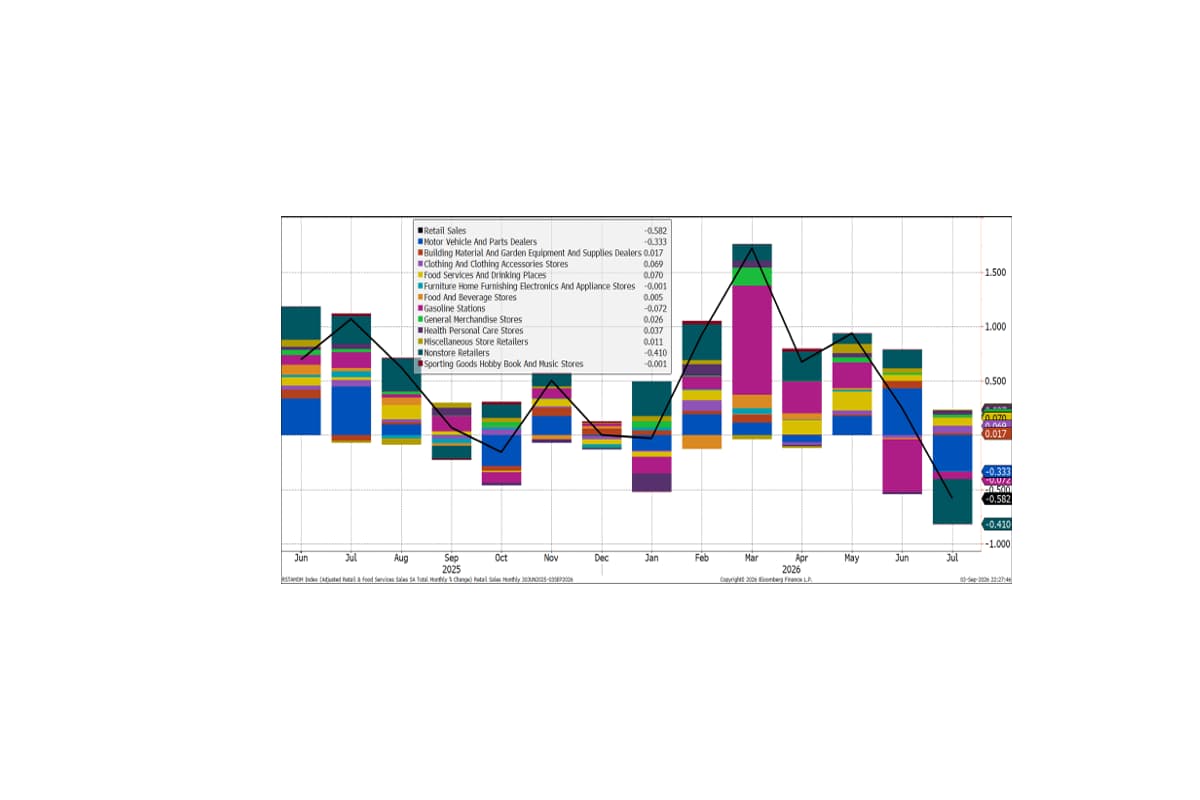
- Retail sales expanded by 5.0% year-over-year but experienced a 0.2% contraction in August, marking the sharpest month over-month decline in over a year.
- The downturn was primarily driven by pullbacks in automotive purchases and non-store (online) retail spending. The drop in digital commerce suggests that June’s Prime Day event effectively pulled forward consumer demand from July into June.
- Corresponding with this reduction, consumer sentiment indices have also softened and consistently underperform compared to the same period last year.
- Despite inflationary pressures, geopolitical shocks, and policy uncertainty, sustained consumer resilience has underpinned positive economic growth in 2026, so signs of a slump may signal weaker growth ahead.
Source: Bloomberg Finance L.P.
Longer Maturity Bonds Offer Attractive Yields
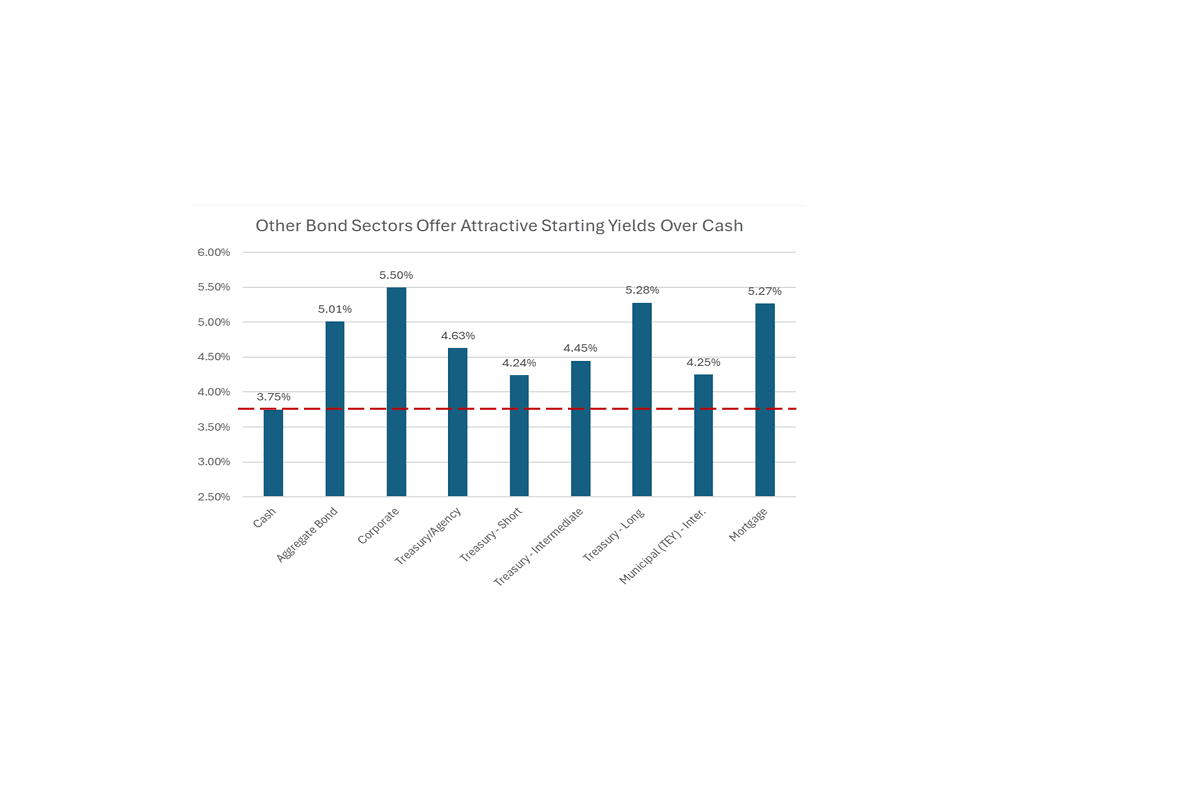
- Now that short-term rates have fallen, money market rates offer a less compelling starting yield.
- Investors currently hold around $8 trillion in money market funds.
- The starting yield is highly correlated with what the eventual return will be.
- Bonds produce real returns. Bond yields are currently higher than the inflation rate for most bond sectors.
- Returns on cash trail those of Aggregate bond portfolios over the long run.
Source: ICE BofaML
Monetary Policy
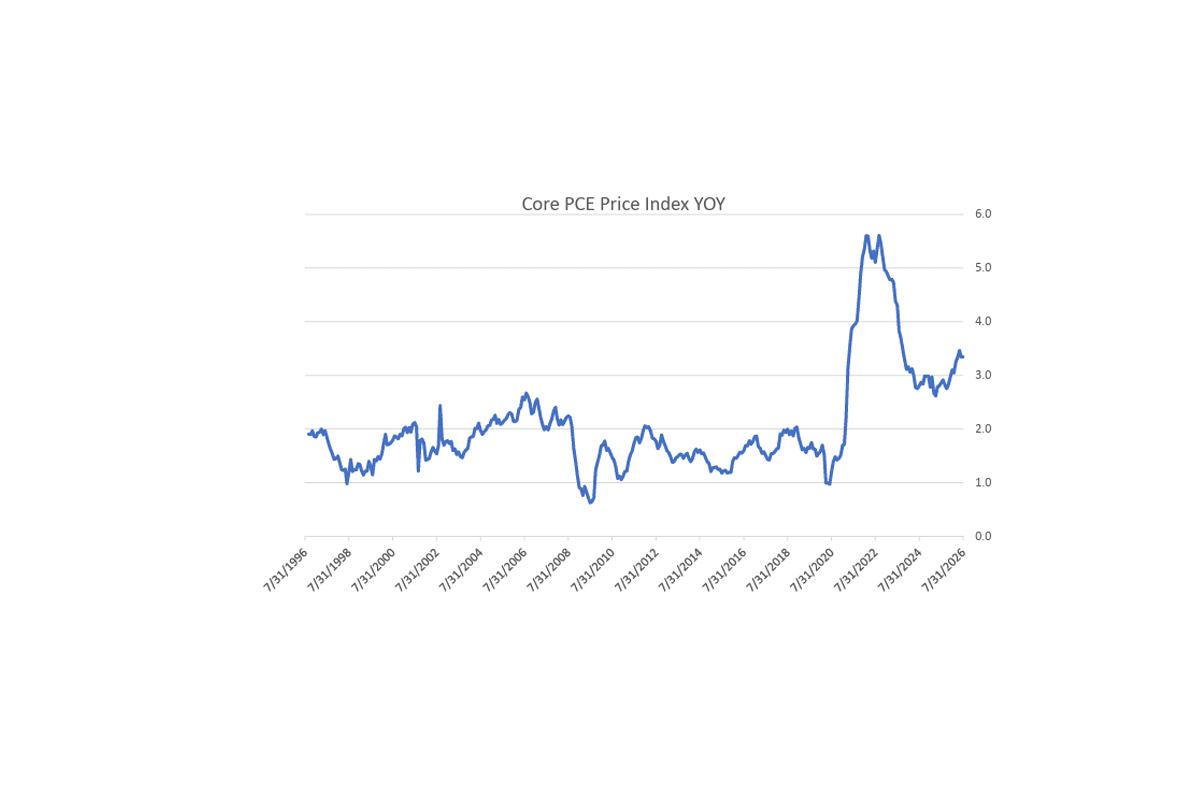
- At Jackson Hole, Fed Chair Warsh made it clear Personal Consumption Expenditures (PCE) price index is the preferred inflation measure and 2% is the target.
- Despite the steady narrative that inflation is moderating, at 3.3% it is currently far from the target of 2.0%.
- Warsh believes economic growth is strengthening and financial conditions are non-restrictive.
- Yet, the market still seems doubtful that hikes are coming, hesitantly pricing in only two through 2027.
- The data and commentary suggest the start of a hiking cycle, which historically go well beyond two hikes.
Source: Bloomberg
Broad Equity Index Periodic Returns
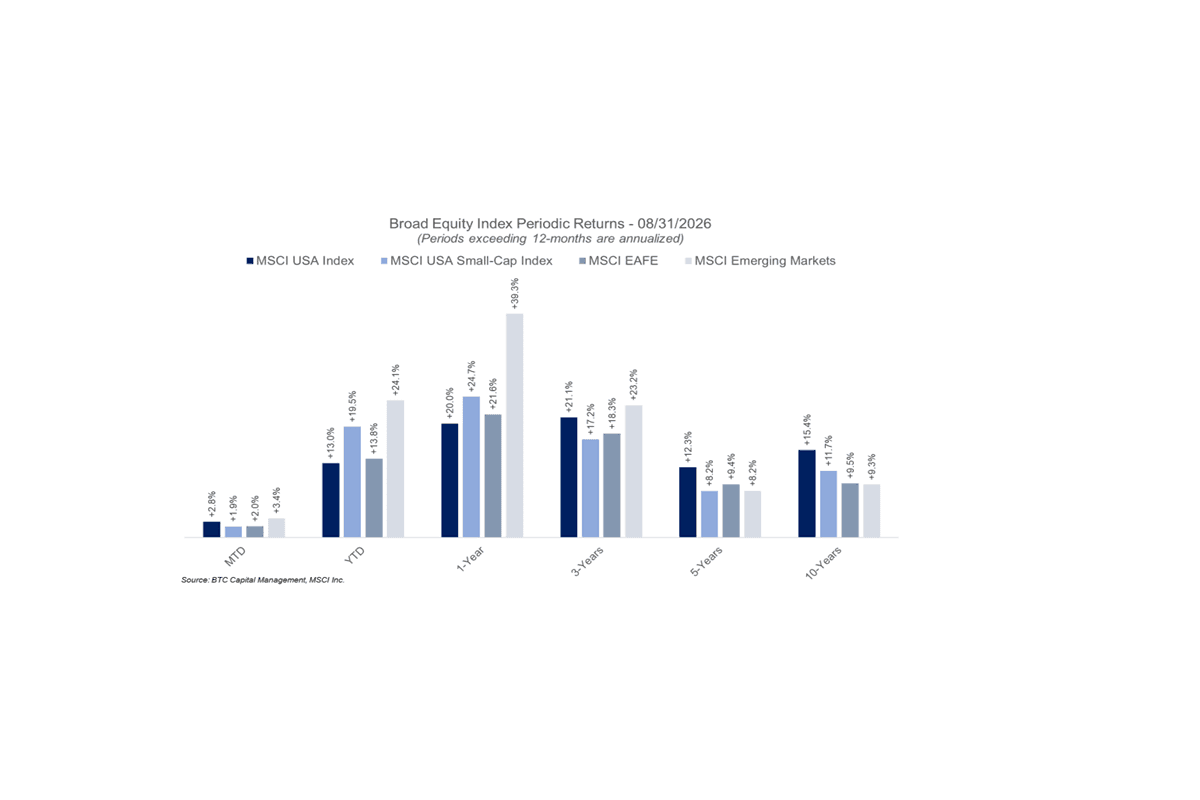
- The chart above presents periodic returns for U.S. large cap (MSCI USA Index), U.S. small cap (MSCI USA Small Cap Index), foreign developed (MSCI EAFE), and emerging markets (MSCI Emerging Markets Index).
- Year-to-date (YTD) returns reflect an overall risk-on sentiment as U.S. small cap and emerging markets have outperformed.
- Emerging markets, while volatile (Korea to the upside, China declining), have continued to perform, supported by earnings growth and relative valuation.
- While foreign developed outperformed U.S. large cap during the first quarter, these two markets have trended somewhat in tandem since then, exhibiting similar YTD returns.
Sources: BTC Capital Management, MSCI Inc.
Earnings-Per-Share Growth
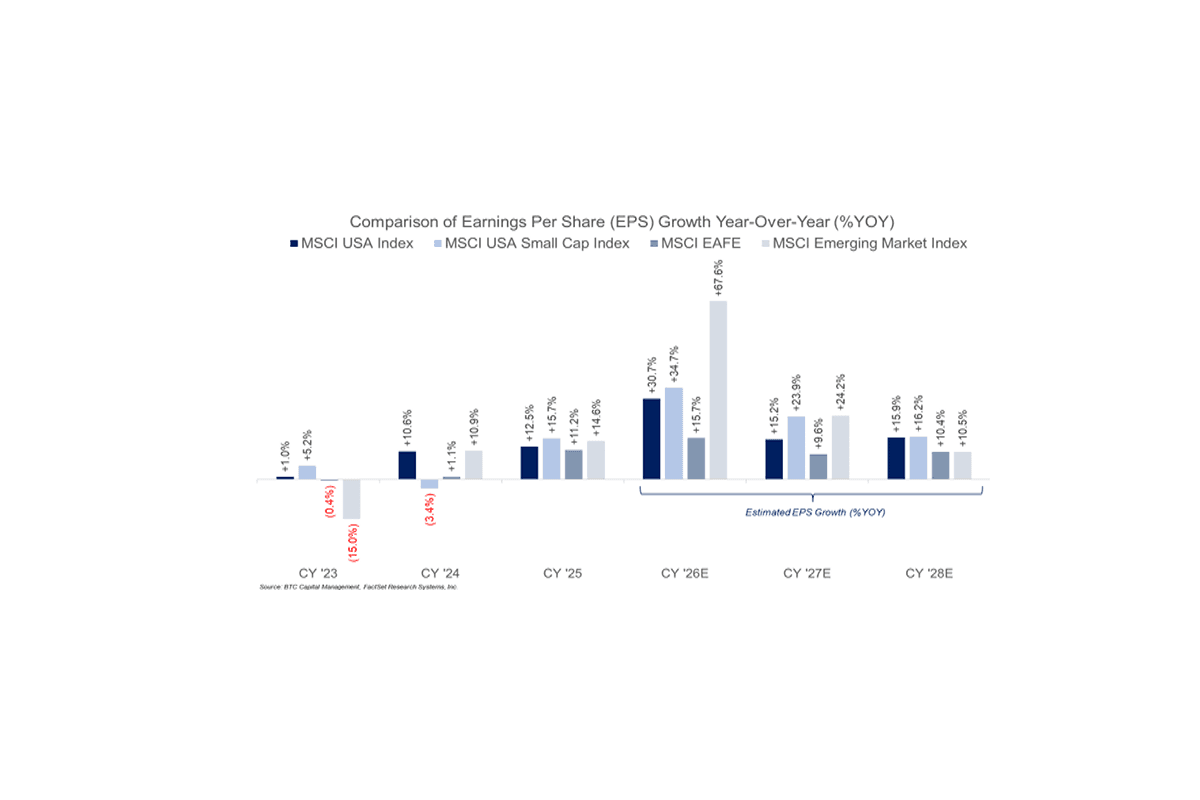
- The chart above exhibits historical EPS growth year-over-year (YOY) and analysts’ EPS estimates for calendar years (CY) 2026, 2027, and 2028 for U.S. large cap (MSCI USA Index), U.S. small cap (MSCI USA Small Cap Index), foreign developed (MSCI EAFE), and emerging markets (MSCI Emerging Markets Index).
- Note for CY 2026, 2027, and 2028 analysts currently estimate growth in EPS for U.S. large cap to materially exceed that of foreign developed.
- For CY 2026, the estimated EPS growth for U.S. small cap is projected to exceed the EPS growth projected for U.S. large cap and foreign developed. Thereafter, for CY 2027 and 2028 the projected growth in EPS for U.S. small cap exceeds that of every other equity class.
- Analysts project EPS growth for foreign developed at double-digit rates for each calendar year presented.
- Estimated EPS growth for foreign emerging markets is expected to outpace that of all other measures for CY 2026, and materially outpaces that projected for U.S. large cap and foreign developed for CY 2027 then slowing in CY 2028.
Sources: BTC Capital Management, FactSet Research Systems Inc.
Important Disclosures
Sources: BTC Capital Management, Bloomberg Finance L.P., MSCI Inc., FactSet Research Systems Inc., ICE BofaML
The information provided has been obtained from sources deemed reliable, but BTC Capital Management and its affiliates cannot guarantee accuracy. Past performance is not a guarantee of future returns. Performance over periods exceeding 12 months has been annualized.
This document is intended for informational purposes only and is not an offer or solicitation with respect to the purchase or sale of any security. Statements in this report are based on the views of BTC Capital Management and on information available at the time this report was prepared. Rates are subject to change based on market and/or other conditions without notice. This commentary contains no investment recommendations, and you should not interpret any statement in this report as investment, tax, legal, and/or financial planning advice. All investments involve risk, including the possible loss of principal. Investments are not FDIC insured and may lose value.